How to Use Nail Shape to Flatter the Beauty of Your Hands?
Nail shape is one of the most overlooked details in a manicure. People spend hours choosing a polish colour or a nail art design, but the shape of the nail often determines whether the final result looks elegant, balanced, and natural. The right shape can make short fingers look longer, wide nail beds look narrower, and the whole hand look more graceful. The wrong shape can do the opposite—making fingers look stubby, hands look heavy, or nails look uneven.
Understanding nail shapes is not about following trends. It is about proportion. A good nail shape works with your natural anatomy, your lifestyle, and the length of your nails. Here is how to choose the right shape and how to shape it correctly.
Why Nail Shape Matters?
Nail shape affects far more than appearance. It influences how strong the nail is, how well polish wears, and how comfortable daily tasks feel.
A shape that suits your hand creates visual balance. For example, a tapered shape can elongate short fingers. A squared shape can add width and structure to narrow nail beds. A rounded shape can soften large hands and reduce the risk of snagging.
Shape also affects durability. Round and squoval nails are less likely to catch and break because they have no sharp corners. Long stiletto or coffin shapes are dramatic but fragile. If you work with your hands, a practical shape will last longer and cause fewer problems.
Finally, shape affects how polish looks. A smooth, even shape provides a clean canvas. An uneven shape makes even the most expensive polish look unprofessional.
Common Nail Shapes in Salons
Most salons offer a standard menu of shapes. Each one has a distinct character.
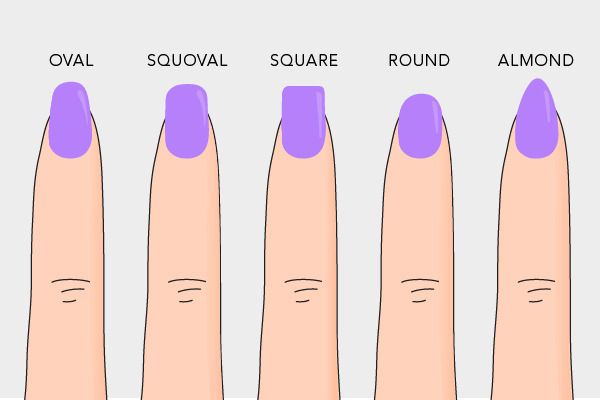
Round. The tip is filed straight across, then the corners are completely rounded to follow the fingertip. Round nails are soft, classic, and very durable. They are ideal for short nails and active lifestyles.
Oval. Similar to round but longer and more tapered. Oval nails create a graceful, feminine look. They flatter short fingers and wide nail beds because they visually lengthen the nail.
Squoval. A blend of square and oval. The tip is straight across, but the corners are gently rounded. Squoval is often called the most universally flattering shape. It is durable, practical, and works on almost any hand.
Square. The tip is filed completely straight, with sharp 90-degree corners. Square nails look bold and modern. They suit long, slender fingers and narrow nail beds. They are less flattering on short fingers or wide nails.
Almond. The sides taper inward to a soft, rounded point. Almond nails are elegant and elongating. They are a favourite for weddings and evening looks. They require a little length to look their best.
Coffin or ballerina. The sides taper, but the tip is flat rather than pointed. This shape is modern, chic, and dramatic. It needs significant length and is best for long nails.
Stiletto. The most extreme shape, filed to a sharp point. Stiletto nails are bold and fashion-forward but fragile and impractical for daily wear.
Ways to Shape Nails
There are several ways to shape nails, depending on whether you are working on natural nails or enhancements.
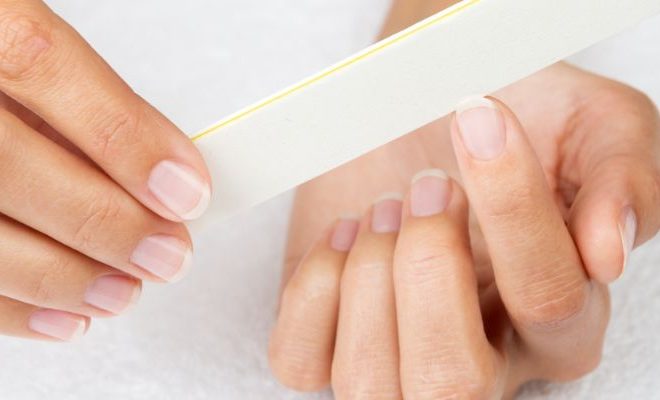
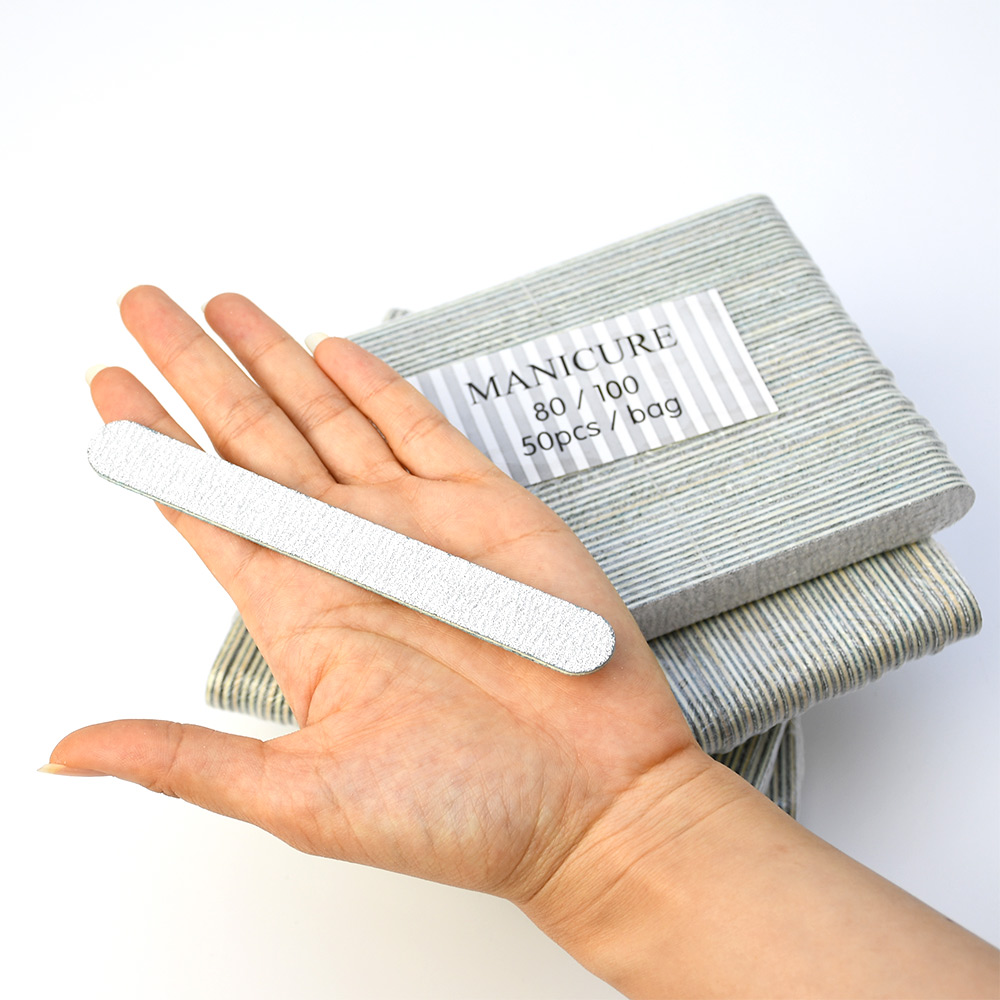
Manual filing. This is the most common method. A fine-grit file, usually 180 to 240 grit, is used to shape natural nails. Always file in one direction only—never saw back and forth. Sawing creates micro-tears that lead to peeling and splitting.
Clipping. Nail clippers are used to shorten long nails before filing. Clipping alone leaves jagged edges, so filing is always needed afterward. For toenails, always cut straight across to prevent ingrown nails.
Electric filing. An e-file with a fine bit or sanding band can shape nails quickly, especially enhancements. It requires skill. Use low speed and light pressure, and keep the bit moving at all times.
Shaping enhancements. For acrylics, gel, or polygel, shaping happens after the product is applied and cured. The technician files the sides, tip, and surface to create the desired silhouette.
Forms and tips. If you are adding length, forms or tips create the initial shape. The final shape is refined by filing after the product hardens or cures.
Choosing the Right Shape for Your Hand Structure
The best shape is the one that balances your natural proportions.
Short fingers. Choose oval, almond, or round shapes. These create a lengthening effect. Avoid square and coffin shapes, which can make fingers look shorter and stubbier.
Long fingers. You can wear almost any shape. Square, squoval, almond, and coffin all look elegant. Long fingers carry dramatic shapes well.
Wide nail beds. Choose shapes that taper inward, such as almond or oval. The tapered sides draw the eye toward the centre and make the nail look narrower. Avoid square, which emphasises width.
Narrow nail beds. Choose square or squoval shapes. The straight sides add visual width and make the nail look fuller and more balanced.
Wide fingers. Almond and oval shapes create a slimming effect. Avoid very short, wide shapes that make the fingers look broader.
Small hands. Medium-length oval or almond nails add elegance without overwhelming the hand. Very long nails can make small hands look unbalanced.
Large hands. Shorter, rounded shapes such as round or squoval create softness and balance. Very long, pointed shapes can make large hands look even larger.
Active lifestyle. Round and squoval are the most durable. They are less likely to catch, chip, or break. Save almond, coffin, and stiletto for special occasions.
Common Mistakes to Avoid When Shaping Nails
Sawing back and forth. This is the most common mistake. It creates tiny tears in the nail layers that travel up the nail and cause peeling. Always file in one direction.
Filing wet nails. Wet nails are soft and flexible. They tear rather than file cleanly. Always file dry nails.
Using a coarse file on natural nails. Coarse files remove too much material and leave rough edges. Use a fine-grit nail file, 180 to 240.
Over-filing the sidewalls. Filing too aggressively at the sides weakens the nail structure and increases the risk of ingrown nails. Follow the natural curve of the nail bed.
Forcing a trend shape. A shape that looks beautiful on social media may not suit your hands. Choose a shape that complements your finger length and nail bed width.
Filing into the corners. Rounding or cutting the corners too deeply can lead to ingrown nails, especially on toes. Keep the shape balanced.
Ignoring symmetry. Look at your nails from multiple angles. If one side is straighter than the other, the shape will look lopsided. Check and correct as you go.
Over-buffing. Buffing smooths ridges, but too much buffing thins the nail plate. Two or three light passes are enough.
Final Thoughts
Nail shape is a quiet but powerful tool. It can make your hands look more elegant, your fingers longer, and your manicure more polished. The right shape is not about following a trend. It is about finding what balances your hand structure and suits your lifestyle. Learn the common shapes, understand your own proportions, and avoid the common shaping mistakes. With a little practice, you can use nail shape to bring out the natural beauty of your hands.
Read also: The Complete Guide to Filing Nails: Why, How, and Common Mistakes to Avoid